Identity first. The system is downstream.

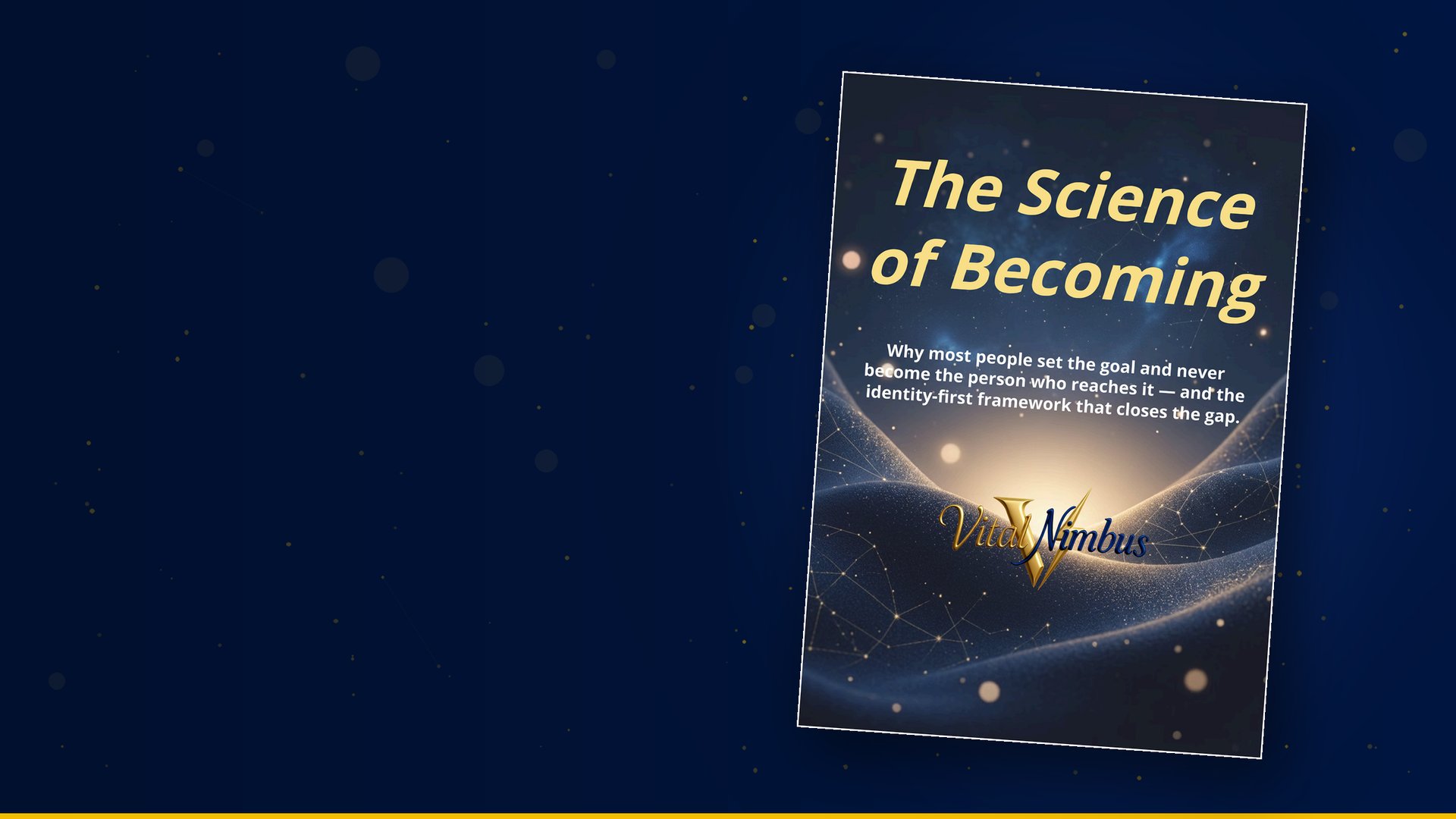
You don't chase the goal.
The Science of Becoming
You become the person who achieves it.
The identity-first framework for closing the gap between the goal set and the goal reached.

You don't chase the goal.
The Science of Becoming
You become the person who achieves it.
The identity-first framework for closing the gap between the goal set and the goal reached.
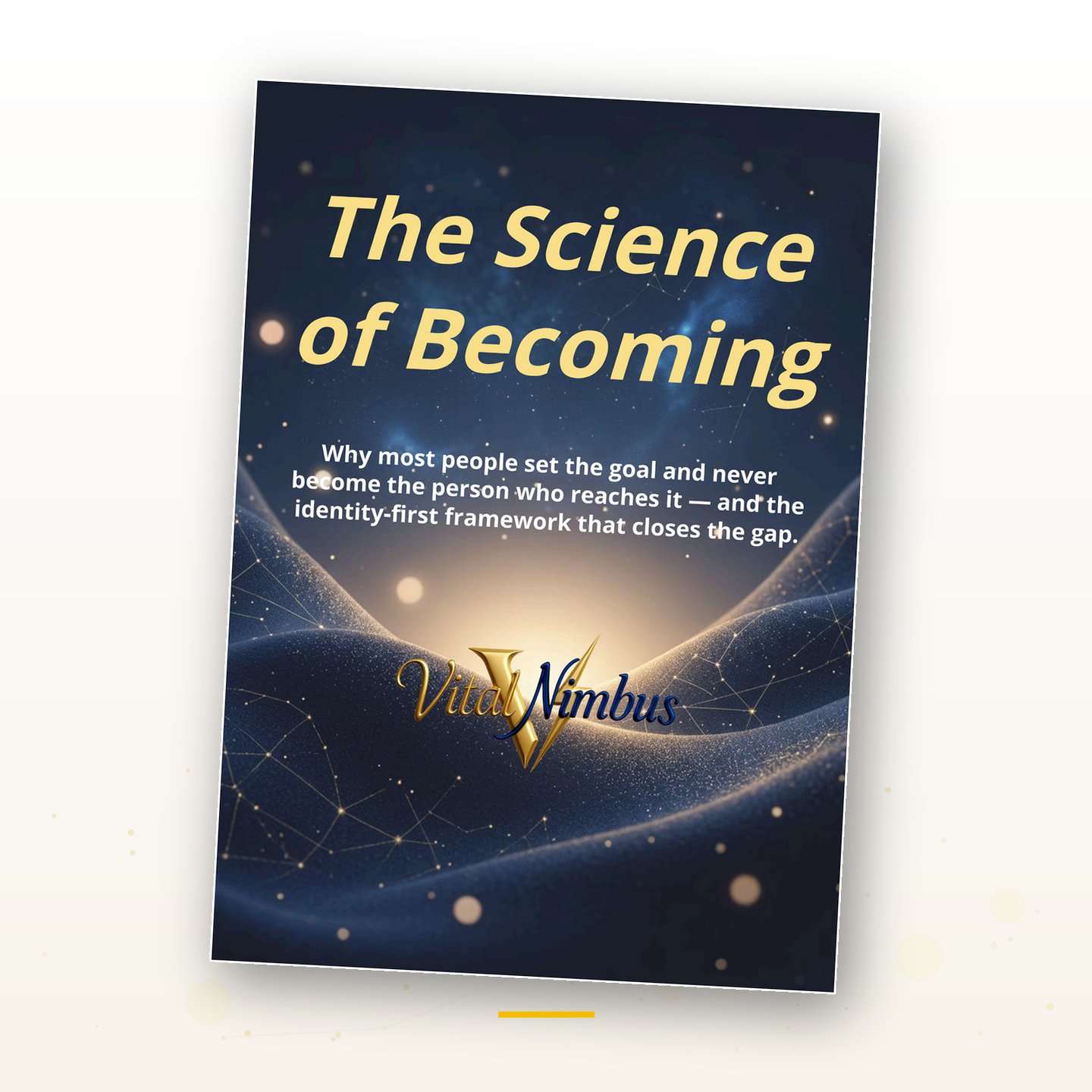
The Science of Becoming - the ebook
Becoming the person who reaches the goal — identity practice, neuroscience, and the lineage that connects them. Eight chapters. Five exercises. One 30-day identity challenge.
Identity first. The system is downstream
Most goal-setting fails for reasons that have nothing to do with willpower.
The standard advice — set SMART goals, build habits, track your progress — operates on the assumption that the person doing the goal-setting is fixed, and the goal is the variable. Decide what you want, then engineer your way to it. This is the dominant model. Norcross's two-year longitudinal study of New Year's resolvers at the University of Scranton found that only nineteen percent kept their pledges. The remaining eighty-one percent did not lack willpower. They lacked an architecture that began with identity.
The model is upside-down. The person is not fixed. The person is the variable.
What Neville Goddard called the assumption of the wish fulfilled — the inner declaration of having already become — neuroscience now describes as identity-based prefrontal simulation: a measurable activation pattern in which the brain rehearses the felt-state of the outcome before the outcome arrives. Behaviour follows. The reticular activating system reorients to recognise the resources required. Effort that previously felt like willpower-against-itself becomes coherent action from a stable identity.
This is not motivation. It is architecture.
The Science of Becoming is built on this premise. The book explains the mechanism — the dopamine loop, the reticular activating system, the seven elements that make a goal hold — and the two identity practices at its centre: I AM, and Living in the End. The neuroscience explains how it works. The practice is older than the science.
Identity first. The system is downstream.
Frequently asked questions
What is identity-first goal achievement?
The standard model treats the person as fixed and the goal as the variable. Identity-first inverts that: the person is the variable, the goal follows. You become the version of yourself who already has the outcome, and behaviour aligns.
Is this manifestation or science?
Both. The practice is the identity-first lineage — Neville Goddard, Maxwell Maltz, Earl Nightingale, Jim Rohn. The mechanism is named neuroscience — prefrontal simulation, the reticular activating system, habit automaticity at a median of sixty-six days (Lally, 2010). One frame, two layers.
How do I start?
Download the free Identity-First Goal Worksheet and run the practice for one week. If it lands, the full framework is in The Science of Becoming.
Contact
Questions? Reach out, we're here to help.
© 2026. Vital Nimbus, All rights reserved.
INFORMATION